In the age of generative artificial intelligence, art has lost its meaning. Anyone can produce masterpieces that would take the actual masters decades to handcraft. These masterpieces, with their flaws, are quickly outpacing artists not only due to the novelty of it all but because it is just so easy to use. No one wants to pay an illustrator thousands of dollars for a book cover when they could generate it for free on Chat GPT. We have all seen these covers, these advertisements, these soulless pieces of art where it was clear a human never touched any of them. Why? Because it’s quick, it’s free, and it will produce something that the “generator” never has to put any real thought into. But what is wrong with these artificial art pieces is well; they’re artificial. They have no emotion; they are flat and as I’ve said before, they are soulless. Events like the CMW art show are so crucial to promote because they demonstrate real artists, who put time, energy, and emotion into each one of their pieces unlike the slop that is mindlessly produced by a robot. Going to the art show felt like a breath of fresh air. I saw so many sculptures, portraits, and landscapes that evoked something in me. Whether that was serenity, melancholy or pure awe, each piece incited an emotional reaction. One artist who time and time again continues to create thought provoking works is Addison Foskey.
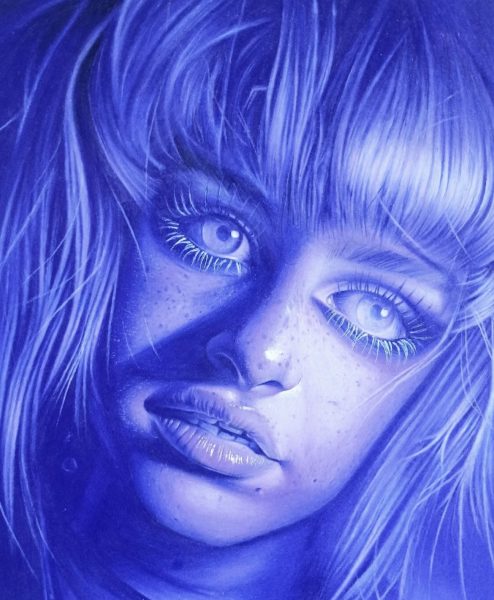
Addison Foskey, in simple terms, is a prodigy in her field. The best way to describe her talents is she uses a colored pencil much like a surgeon uses a scalpel-clean and precise. I say talents, but she was far from born with a natural talent to draw. Addison, like anyone else, carefully curated her skills after years of tedious practice. Her hard work pays off in stunning, detailed artwork. For the art show her AP Drawing portfolio was on display, and it was some of the most haunting and eye-catching art I’ve ever seen.
If you didn’t know, AP portfolios are based on a Sustained Investigation. It is a collection of artworks based on an inquiry, a single guided question or concept. Addison defines her sustained investigation as “how can figures portray themes pertaining to death?” Addison was drawn to this subject because she was “fond of the darker works” she had done last year and “wanted to elaborate upon that.” And darker works she created, as multiple pieces focus on the grittier notions surrounding death like cleansing one’s soul in purgatory to decaying in the woods. One of my favorite drawings that illustrates her evocative concept is “I See the Light.” This eerie piece instantly captivated me due to the way Addison made her portrait look past the viewer. Morbidly enough, it felt like I was finding a corpse. Addison says, “I See the Light,” shows something that is equal parts earthly and divine. While the other pieces in my AP portfolio focus on places beyond death, “I See the Light” illuminates the body that is left on earth after the spirit ascends. While one’s soul can be envisioned as eternal, one’s body is temporary and will be restored to Earth through decomposition as interpreted in the biblical excerpt “For you are dust, and to dust YOU SHALL RETURN”.”
Overall, the creation of her portfolio was filled with hardships. One thing many people are not aware of is that College Board is picky about references. If they feel like you relied on a reference that was not yours too heavily, your score could be canceled. This means that most AP art students focus on taking their own reference photos to not risk their score being compromised. For Addison this was not an easy task as her portfolio focused on the “afterlife.” Multiple photos involved weird angles that she had to photograph without help or ideas that couldn’t be photographed at all. Yet, her references turned out to be more than adequate to create her unforgettable works of art.
Outside of AP Drawing, Addison is the president of the National Art Honor Society (NAHS). She is famous for the posters she has made for CMW Stage Wright. These posters are hand drawn with alcohol markers and color pencils. The posters depict the cast members for Great Gatsby and Frozen in a traditional poster size. In addition to the posters, she contributed to the Italian Festival chalk art, making squiggly spaghetti fly off the asphalt. I can go on and on about all the fantastic things Addison has created for the school and the leadership she provides. As a member of NAHS, I am a firsthand witness to the inspiration that Addison Foskey is, and I cannot wait to see what Addison does next year!
I like to end each article with a call to action. While I know this won’t be well received, I urge everyone to avoid using generative AI. Artificial Intelligence cannot paint a picture, rather it clips and merges preexisting artwork made by real artists. Go commission an artist who knows what they are doing and has spent years perfecting their craft. Or better yet, make the art yourself! You may not be amazing at art today, but in time you will realize that the art you make outdoes any slop produced by a mindless machine. Addison advises, “for artists concerned about their skill level, making any art at all with your own time, the skills you have and real genuine effort will ALWAYS be an eternity better than using generative AI simply because it’s human. Keep practicing, learning from others, and being confident in your ability to grow and beautiful art that YOU ARE proud of will follow.”